


Lots going on - election stuff is really starting to heat up, plus some important developments in Sapelo I’m staying on top of. Can’t do it without your support, so buy my book, choose a paid subscription to Doom, or throw a few bucks in the Coffee Fund. Thanks. - jg
***
As a heat wave grips much of the country, conditions for conflict are ripening. This is a typical pattern for the American summer — acts of violence rise with temperatures — but the last week has been hotter than normal.
Combine this heat wave with a few other patterns of life under the reign of Donald Trump and the possibility of an explosive event only grows.
First, murders and violent crime are down across the country but police killings are on the rise. The downward trend in daily violence could change, but so far this year, 2026 looks to be one of the least violent in decades in cities and towns across America.
This year’s drop in violence reflects the general decline in violent crime since 2020, when the isolation and economic desperation of the pandemic was a major factor in a spike in acts of violence and homicides. The violence of that year played an undercard to the unrest over the killing of George Floyd and the contested presidential election.
Despite the decline in violence so far this year and since 2020, police continue to kill more and more Americans. So far this year, police have killed 646 people, on track for another year in which American law enforcement has killed more than 1,300 people nationwide. (A decade ago, this annual number stood around 1,000 police killings a year.)
Police killings are an important measuring stick for understanding excessive force by law enforcement, which disproportionately affects Black and Brown communities. It’s far from perfect, but police killings can be a relatively effective way to measure distrust between minority communities and the law enforcement agencies that occupy them.

American law enforcement agencies have done relatively little to address the distrust and animosity from minority communities since the pockets of unrest that shook the nation a decade ago (read my book that recounts all of that madness), and occasionally boil over in the aftermath of heinous police killings like that of Floyd.
An underclass of Americans who are overly policed and under-represented politically — even more so thanks to Republican redistricting efforts across the South that are diminishing Black voting power — continues to exist. This is a situation that will inevitably lead to unrest.
If the aggressive policing and open attempts to reduce or eliminate minority political power weren’t enough, the Trump administration has surged immigration agents and even the National Guard into Black and Brown communities. In Memphis last week, members of the National Guard killed Tyrin Johnson, who is Black. Two weeks ago, US Park Police in Washington DC — given new powers by the Trump administration — went on a chaotic and questionable police chase that resulted in the death of an innocent bystander, Nolberto Armando Sanabria Meza, who was from Venezuela.
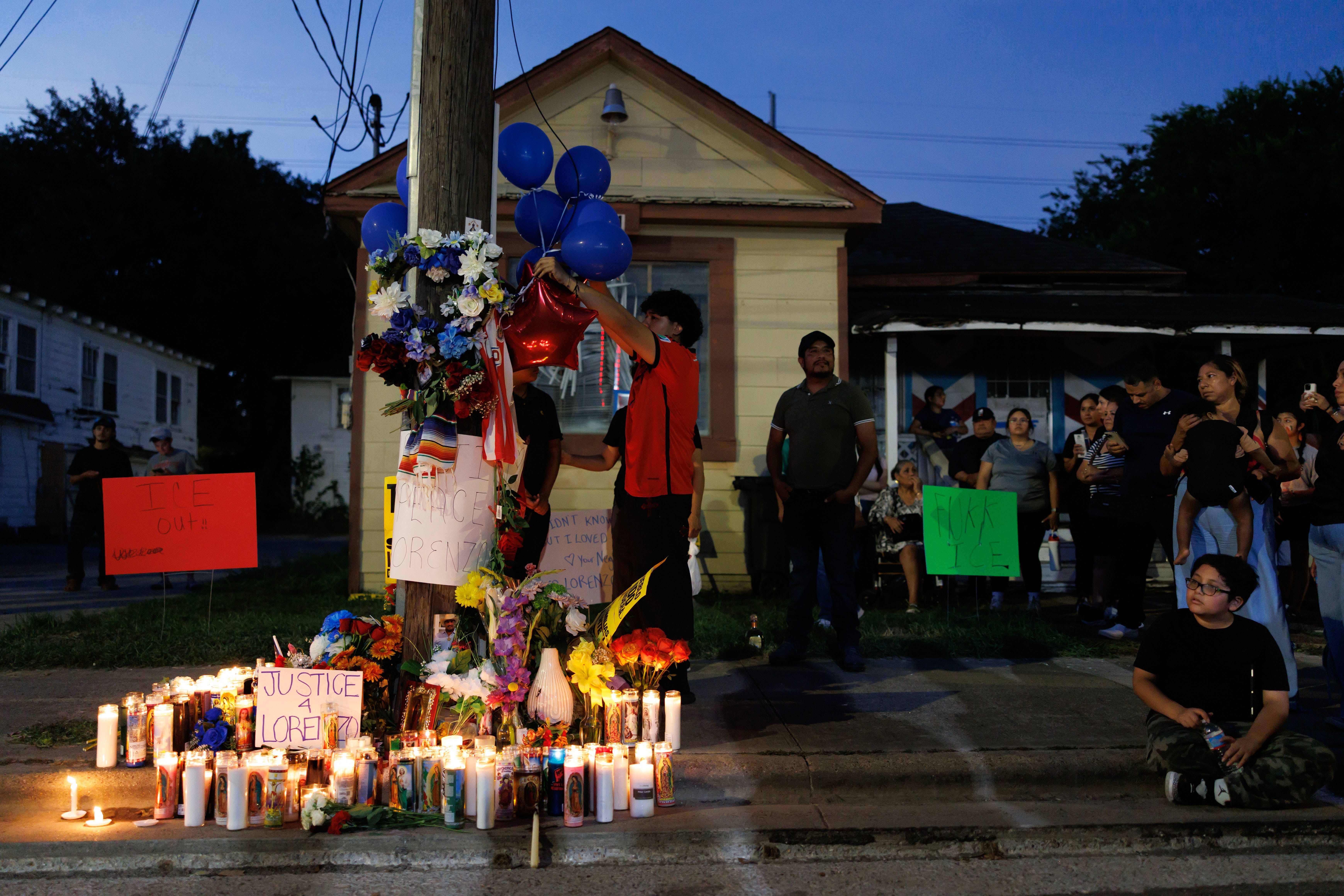
On Tuesday, ICE agents in Houston shot and killed a Mexican man, Lorenzo Salgado Araujo, during a traffic stop. Araujo was apparently still alive when security footage from a nearby store captured him lying on the ground in handcuffs, when “a loud groaning sound could be heard,” an employee told the Washington Post. Another witness said Araujo could be heard saying, “You’re killing me!” ICE has said Araujo tried to ram agents with his car — a frequent excuse the agency has used for killing people, and one that is often directly contradicted by video evidence in cases like the killing of Renee Nicole Good in Minneapolis.


Meanwhile, immigrants across the country are being deported and detained at historic rates. Last week, ICE arrested more than 10,000 people in five days. As Trump’s immigration forces capture more and more immigrants, the deaths of those inside the nation’s immigration detention centers continues to rise. Nearly 50 people have died while inside immigration facilities run by the Trump administration, or in local jails while in the custody of local law enforcement working with ICE. This is the highest number of immigrant deaths in custody ever recorded.
As I reported in March, many of those deaths came under questionable circumstances in which ICE either misled the public about the cases, or immigrants suffered under poor conditions inside facilities.

Trump’s immigration dragnet has had a traumatizing effect on Brown communities across the country. In just about every city and town, someone knows someone who went out for work one day and never came back. Some were simply sent back to the country from which they came. Others have been sent to distant nations with poor human rights records that they have no ties to as the Trump administration uses payments and threats to cajole nations in Africa and elsewhere to house immigrants picked up in the U.S.
The historically aggressive attempts by the Trump administration to completely rid the U.S. of tens of millions of undocumented immigrants have caused even right-wing Americans to question the efforts, especially those who rely on immigrant labor, like farmers.
Right here in Savannah, students who played baseball with Johan Efrain Sandoval Rodriguez, a 22-year old student at Savannah State University who was here on a visa from his native Dominican Republic, are questioning why he has been taken by ICE. The agency says Rodriguez failed to comply with requirements of the visa. Last week, the Savannah State campus was briefly put on lockdown as agents chased Rodriguez down and took him into custody.
With ICE enjoying another summer of acting with impunity in immigrant communities — thanks to the help of local law enforcement — the agency’s Office of Professional Responsibility has changed its mission from acting as a watchdog for misconduct amongst agents to hunting for anti-ICE protest and dissent online, Wired reported. Meanwhile, agents are harassing U.S. citizens who have criticized the agency, showing up at the home of a New York man who sent acting ICE director Todd Lyons an email that called Lyons a “monstrous human being.” ICE agents also showed up at a polling location to question a poll worker who had posted comments critical of the agency following the killing of Good in Minneapolis.

The signs of our growing police state are there if you look. As we inch closer to November, the question will become how this apparatus of local and federal law enforcement, immigration agencies, and the National Guard and the military could be used to overturn an election that Republicans are likely to lose. It’s possible that the hottest time will be the fall.
***
Doom socials:
Bluesky - @americandoom.bsky.social
TikTok - @americandoom_
YouTube - @americandoom_
Instagram - @americandoom_