


Watching Secretary of Defense Pete Hegseth give another bombastic press conference that seemed like an act of absurdist theater this morning as the chyron reminded us of the ridiculous name of our war in Iran — Operation Epic Fury — I had one of those moments where I’m reminded just how staggeringly dumb much of modern American life is. It inspired me to start something new here at American Doom, where much of my work lately has been focused on the hard news of holding the Trump administration and its threats to democracy to account — a new section called Dispatches.
Here, you’ll get writing that’s more along the lines of historically correct than the often chaste and detached news voice that’s required by my journalism. Considering my recent investigation into the deaths of detainees in immigration custody, I thought it would be appropriate to revisit some past reporting on immigration and the border.
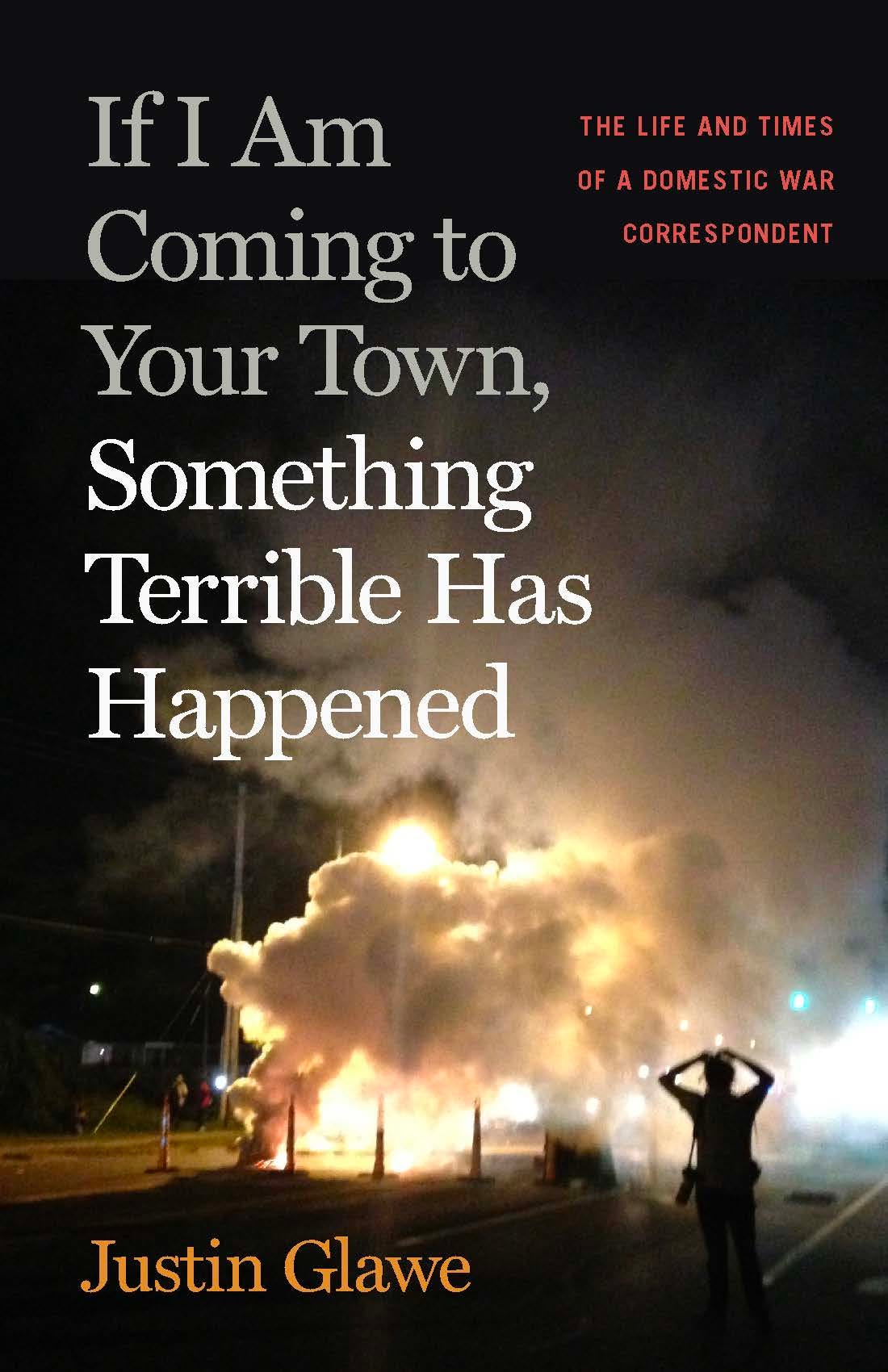

Below, you’ll find an excerpt from my forthcoming book, If I am Coming to Your Town, Something Terrible Has Happened. It’s being published by the University of Georgia Press and comes out in early June. I’ve provided some links below to past excerpts as well as this PDF which contains a QR code for a 30 percent discount. Feel free to share this PDF with anyone who you think might be interested in the book. You can also go to UGA Press’ web page for the book and enter the code 08TERRIBLE to get the same discount.
You can also read other excerpts from the book, which focus on my hometown, Peoria, Ill. ,and the unrest in Baltimore following the killing of Freddie Gray.
As always, if you support my journalism and writing, please choose a paid subscription to American Doom or drop a few dollars into our Coffee Fund. Those of you who choose a founding membership to American Doom will get a signed copy of Something Terrible.
EL PASO AND JUAREZ — After hundreds of miles of desert floor, a wind farm emerged. It was gone in a minute, passing by 34,000 feet below my comfortable seat on a packed plane heading over West Texas. It looked like the same wind farm I passed when I drove here a few months before, I thought. There can’t be more than a few of them. There’s not really more than a few of anything along the nine-hour stretch of Interstate 10 from Dallas to El Paso. Nothing but desert wastelands as far as the eye can see. I stopped at a gas station in Odessa, a town of oil workers with their jeans tucked into their boots and bad gas station hot dogs. You have to get gas in Odessa, because that’s the last place there is until El Paso, but that was another trip. That was when I decided to drive from Dallas to El Paso to get a sense of how far it actually is. You can’t really tell that in a plane. The only way to know how far El Paso is from everything is to drive there. Flying is much easier. Plus, you can see the pink and orange tops of the mesas as they rise up from the desert floor just before the sprawling grids of El Paso and Juárez come into focus through the broiling, dusty haze of any given afternoon.
El Paso is its own world. It gets roped into an amorphous political concept that has no real basis in geography generally known as “the border,” but El Paso is more than just a town with fences on an invisible line guarded by men with guns on one side and children with guns on the other. Juárez is an even more misunderstood place, which is to say a living, breathing thing, because cities are really their own thumping creature manifested by the people who occupy them. Growing up in the Midwest, they would have seemed like they were on the moon. I was in love from the moment I walked on the scalding asphalt of their streets.
I’d come to the border for a new beat of American horror I was working: immigration. The first two years of the Trump administration were filled with shameful stories of desperate migrants caught up in concrete border cells and disgusting and dangerous privately run gulags at the behest of America’s would-be Latin American-style dictator. Asylum seekers were routinely and illegally turned back by border officials following Trump’s new dictates. The administration separated some 3,000 families, locking up parents hundreds and thousands of miles away from their children. Then the White House lied about it, saying they “did not create a policy of family separation.” Border guards dressed up in riot gear and closed the bridges in El Paso so Trump could have a show of force for a migrant caravan that was 1,500 miles away. A seven-year-old girl died after drinking contaminated water that guards at a detention center in New Mexico refused to touch. And that was just a six-month stretch of 2018.
Looking back, it makes sense: Trump’s entire campaign was run on the high octane hate fuel of the threat of immigrants, so it was only natural that the first two years of his administration were focused on the punishment and degradation of those same people. Also, signing executive orders and locking up immigrants en masse was really one of the only things the corrupt and feckless Trump White House could ever hope to accomplish. Filled with amoral climbers and reactionary thugs who were just as dimwitted and reckless as their boss, the White House of the 45th president was not built to tackle complex economic policy or global diplomacy. It was built to lock up perceived enemies and convince Americans who were mentally handicapped by ignorance-driven hate that Trump was a tough guy fighting for them. All you need to know about Trump’s ability to understand the complicated issues for which he was elected to navigate is that he thought building a wall across thousands of miles of desert would stop people from moving from one place to another for the first time in human history. Part of that wall was supposedly being built in El Paso.
Most people have never been to the border, so they don’t really understand how much of not really a thing the border is. I will never understand why people are so afraid and angry about people coming across it. I care as much about people crossing the border from Mexico into the United States as I care about the dozens of cars full of people who will cross from Florida into Georgia over the next five minutes and every next five minutes for the rest of my life — not at all. I’m secure in the belief that nowhere in those cars driving south from Brunswick or north from Jacksonville are people who are going to come to my house and hurt me or take my job or ruin my way of life. I think the same of anyone who crosses the invisible line between Juárez and El Paso, but many people don’t, so that border has become big political business. I needed someone in Juárez who could explain to the world that the border was simply a mental construct, and began asking friends both in the news business and outside of it if they knew anyone who could complete this task. I learned there was a man there who could distill the complexities into something anyone could understand. So I set out to meet him.
I paid a $1 toll to a woman in a booth and walked up a steep sidewalk on a bridge between the two cities and back down onto the street in Juárez. Standing there leaning against a Toyota pickup truck was Julián Cardona. He had spent almost his entire life in Juárez. First, he had worked in the maquiladoras, the cheap labor factories that built cars and appliances mostly for Americans. Then he had learned the art of photography and began documenting the city in all its grim and vibrant complexity for the daily newspaper there, El Diario. Now, in his early 60s, he still worked as a photographer but got most of his income by acting as a fixer for people like me, people who came across the border looking for help in telling stories. Julián and I shook hands and got into his truck. I needed to speak to migrants, I said. We drove farther into Juárez, through the industrial areas that held the maquiladoras and to Casa de Migrantes, the city’s small but busy migrant shelter.
One day in February 2019, Julián and I were driving around Juárez when we learned that the federales had rounded up migrants and were keeping them in a gymnasium. We drove to the gym and walked inside to find hundreds of men, women and children sprawled out on cots and blankets on the floor. In a back room we found a young man in his mid-20s laying on a makeshift bed made of a door resting on two piles of gymnastic floor mats, his legs in styrofoam braces, and his wheelchair resting next to him. His name was Jose and had made his way from his home in Honduras to Juárez and had wound up on the Paso del Norte bridge, trying to get into the United States. There, border guards put him in a cell and provided him the type of humane treatment that could only come from representatives of the greatest country in the world: they told him he was worthless, because he was in a wheelchair he had nothing to contribute to society, much less the United States of America. He told them that he was just asking for help and it was up to them to decide whether they were willing to give it to him. Pedir es fuerza y dar es voluntad, he told them. Asking is strength and giving is will, Julián translated for me. Jose made it, and he ended up in Dallas for a while where Sarah and I visited, bringing supplies from a GoFundMe I’d embedded into a story I’d written about his plight. He made us friendship bracelets from his bed, where he would lay and pet Hendrix. But the GoFundMe eventually ran dry, and his family ran out of money to take care of him. He returned to \Honduras.
Julián and I left the gymnasium and headed toward the bridge back to El Paso. There is a strip of bars there, including the Kentucky Club, where legend has it the margarita was invented. I was obsessed with another drink called chucho, cheap tequila in which roots from a native plant called the chuchupaste soak and give the tequila a harsh, earthy flavor. I drank Tecates and shots of chucho while Julián drank Jack and Cokes and told me how Juárez had changed from his youth. Gone were the days of pimple-faced and boot camp-weary soldiers coming across the border from Fort Bliss in El Paso for a rowdy night on the town. The cartel violence that began its climb toward a zenith of about 1,000 killings each year by the early 2000s. I sat with Julián in bars like Club Quinze, looking at old Playboy centerfolds plastered on the walls and ceiling, thinking about how this was one of those far-flung places on the edge of the world in which I’d always imagined myself having an adventure. But for Julián, this wasn’t a remote foreign outpost. This was home. It was his Peoria, and I was just another curious interloper who was adding “JUAREZ —” to his coveted list of exotic datelines.
Julián taught me a lot of things, but one of the most important was that the concept of remoteness is entirely subjective. Peoria is remote if you’re from Juárez. What Americans tend to think of as normal can be anything but for people who aren’t from here. Juárez wasn’t necessarily a place to be scared of, I learned. Migrants are no different than us, I knew. Julián was no different from me, a curious guy who liked asking questions and telling stories. Those stories inevitably end up being the same in one way or another. Someone always has power or money and is using it to get more, while the few struggle to get their cut.
While I spent most of my time at the border speaking with migrants from Mexico and Central America, Juárez was awash with people from all over the world trying to make it to America, including the Middle East. That was constantly used as a fear-mongering tactic in the first years of the Trump administration — ISIS is coming in the latest migrant caravan! In Dallas one day, I received a message from an Iraqi woman whose husband was in a privately run immigration prison in Laredo, Texas.
Zinah Al Shakarchi grew up in Iraq, but fled after she was shot for doing her job as a food inspector when she turned away a sugar shipment tainted with gasoline. Not long after, she met Safaa and the two quickly fell in love and married. They moved to the United Arab Emirates, but as Shiite Muslims they were hounded out of the majority-Sunni country. Together with their two children, they fled, arriving first in Mexico City, filled out the wrong visa paperwork, and ended up crossing into the U.S. near Hidalgo, Texas out of pure desperation. There, U.S. immigration officials took Zinah and her children away from Safaa, who became distraught and near-suicidal. He stopped eating inside the prison. Zinah and the kids fled to Canada, where she kept in touch with me over text and phone calls. Immigration and the border had become my latest obsession, a new set of traumas to consume in secondary fashion. Zinah and Safaa were just two of many people who had been caught up in the inhumane system I tried to penetrate. As always in America, there were tens of thousands more who were being abused by the systems we were supposed to trust.
Throughout all of this border chaos and terror inflicted on innocent migrants, plus the daily onslaught of controversies and unhinged madness coming from the White House and Trump’s Twitter account, I kept wondering about Las Vegas. I wondered why it seemed to have faded so quickly from memory. It seemed like a pretty big problem that such a bloody massacre could take place and the only thing that came from it was conspiracies about how it was all fake and an attempt by the government to take people’s guns. The dead bodies meant nothing to the people online theorizing about how and why unseen forces had manipulated Paddock to do their globalist bidding. Confronted with an obvious problem — Paddock had what can only be described as a fuckton of firearms and ammunition — the American right and online zoo of gun fetishists and government conspiracy nuts ignored the issue at hand and instead focused their energy on twisting it anyway they needed to avoid the problem at hand. I knew something about that myself, although I wouldn’t have admitted it at the time — the Thing was my big problem I chose to ignore in favor of diving down some rabbit hole of investigative fury. Taking in all this conspiratorial madness as the world continued to turn, quickly leaving Vegas behind, I went back.
***
LAS VEGAS — The desk was covered in takeout containers, empty packs of cigarettes, and beer bottles. I had been in the room for four days, leaving only to go to the convenience store inside the lobby of Circus Circus to get more beer and cigarettes. It had been a year since the massacre, and I had returned to try to make sense of the senseless. Mostly, I stayed in my room and got drunk at a bar in the casino. I was binging episodes of The Office to try to get my mind off whatever it was that was making me feel like the world was falling all around me, the Thing kicking my ass. I knocked myself out each night with Miller Lites and shots of Jameson at a bar inside the casino before retreating to my room to finally and mercifully try to sleep away the the Thing inside me that wouldn’t let me go. The room gave me anxiety, I gave myself anxiety, the casino floor gave me anxiety, the whole city did. All around me, all I could see was future dead people. Smiling faces turned to blank stares of death on the blood-soaked ground. I kept seeing Stephen Paddock’s dumb, drunk, soulless eyes in the only picture that had ever been found of him, a picture I’d seen a thousand times online. Through the incessant chimes of the slot machines, I heard far-off screams.
After a few drinks at the bar that fifth night I had my fuck it moment. I went back to my room and packed a small bag with a notepad, called a cab, and told the driver to take me to Mandalay Bay. I got out and walked past the bellhops and security guards and into the lobby. Everything there was black and gold. But there was a dimness to it all, like looking at street lights at night with your sunglasses on. There was a dark film over everything, a shadow I couldn’t make sense of. I walked past a bar where a lounge lizard sang Frank Sinatra tunes to mostly empty chairs. Walking past a set of gleaming, golden elevators, I briefly thought about hopping in one and heading up to the floor where Paddock stayed that horrific night a year before. A security guard nearby, either through my own paranoia or because they were actually eyeing me for carrying a messenger bag into a casino late at night, scared me away from that plan. Instead, I walked out onto the massive casino floor and wound up where I always do in casinos, the sports book. I was drawn even more quickly than usual to the sports book at Mandalay Bay. You couldn’t miss it. The TVs climbed what seemed like three stories high off the casino floor. It was an electronic wonder that brought the solace that only a meaningless, early season hockey game or watching a few trips around Santa Anita racetrack can provide. Comforted by the movement of players in countless games across the country and around the world, the sports book in any casino is simply an extension of every family living room I grew up sitting in, where the green glow of some field came through the television. Childhood memories of going with my dad to the off-track betting parlor in Peoria, where cigarette butts and ticket stubs littered the hardwood floor, are never far off as long as there are horses racing endlessly around an oval, beamed to me in whatever casino I’m in from tracks back east where my nana played the ponies in the Poconos.
As I steadied myself under this comforting glow, I looked for a bar. Settling down on a bar stool I ordered a Jack and Coke. I sat there sipping my drink and staring blankly around me, wondering why I had come here. In four days, I had spoken to no one, done no reporting, and come to zero conclusions about why the massacre seemed already forgotten. They should tear this whole place down, I thought. Implode the Mandalay Bay into a pile of rubble. They did it all the time all over Las Vegas for plenty of other reasons. The hotels and casinos that made this town famous the world over are mostly gone, having been replaced by newer and shinier models in an eternal cycle of capitalistic renewal. Why was Mandalay Bay still here? And how could all these people be sitting here, happily drinking and gambling, knowing what happened thirty floors above them? I began to feel sick to my stomach and quickly finished my drink. Like the Motel 6 in Hammond, Indiana where Afrikka Hardy was killed, I had come too close to the epicenter/wellspring of violence for my own good. I felt that I had to see it with my own eyes, even if it made me ill. I had to know what it looked and felt and smelled like, even if it hurt me. I need to know what has happened and how and why so I can understand its role in creating the world in which we all live. I had to go to the heart of everything to try to make sense of all the madness of life. Here I was again, sitting in a crime scene that wasn’t a crime scene anymore. The terror had passed and, just like Tall Bob’s in the South End of Peoria, business had once again resumed.
I limped back to Circus Circus, deciding to walk off this terrible feeling. When I arrived I was ready for a drink. I sat down at the bar and received a text from Zinah: Safaa had been freed. No reason was given. ICE simply let him go from the detention center in Laredo and he was on his way to Canada to rejoin his family. Zinah said it was my reporting that helped to make this happen, and she thanked me. I cried to myself at the bar. Sarah was asleep, two time zones away in Dallas. My editor was down for the night too in New York. Journalism might have helped Safaa but it couldn’t save us from ourselves if we couldn’t even remember let alone do something about an event like the massacre just a year later, I thought to myself. In that moment, that’s all I had. Just me and my thoughts at a bar in a Las Vegas casino writing about some historic event and feeling that none of it mattered.
It did matter. It’s just that voice inside telling me it did not wouldn’t stop. It wouldn’t stop questioning and wondering and asking what it all meant, whether it was worth it, what I was doing, where I was going, what I was going to do, who I would do it with, why I was doing it. God, that why… If there’s ever a word in this world that I’d like to never hear in my head again, it’s why. That why was the stowaway’s favorite word, the one it asked the most and at the worst times.
It was asking it as I sat at the bar and thought of Safaa and what would happen next, as I tried to shut up the voice by making small talk with the bartender. He wanted nothing to do with me. I was too drunk to make sense to anyone but me and the Thing.
Follow Doom on social:
Bluesky - @americandoom.bsky.social
TikTok - @americandoom_
YouTube - @americandoom_
Instagram - @americandoom_
X - @americandoom_